

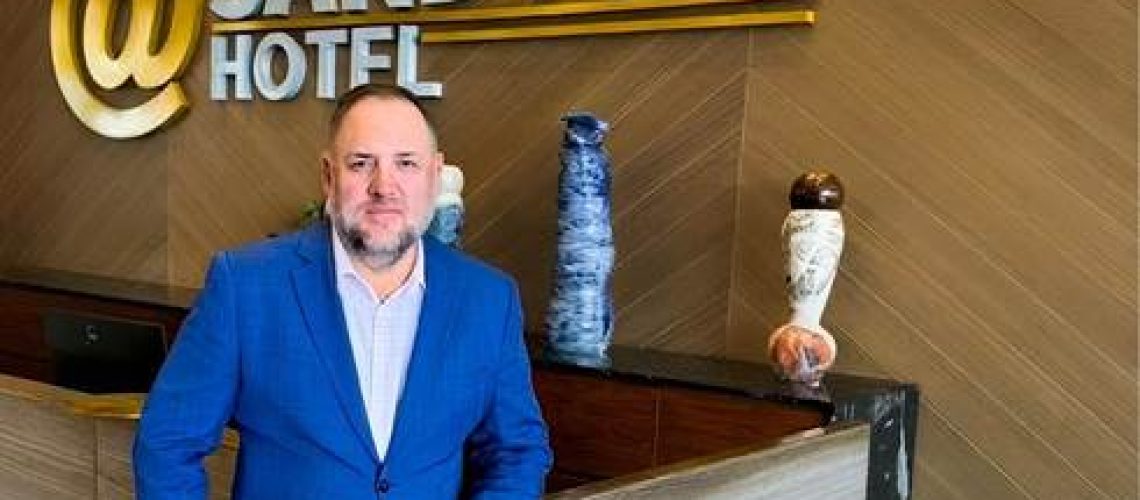
By Anthony Batistich, General Manager, @Sandton Hotel
There is a version of the hospitality business that is entirely focused on the next check-in. Fill the room, turn it over, fill it again. It is a model that has served the industry well for decades, and it remains the dominant operating logic across most of South Africa’s hotel sector. The problem is that it leaves a substantial and growing segment of guests almost entirely underserved.
South Africa is at the convergence of several powerful long-stay demand signals, and the hospitality sector is not keeping up with any of them. The Digital Nomad Visa, formally implemented in March 2025, allows foreign remote workers to reside in the country for up to three years while earning income from international employers. Cape Town alone is projected to contribute approximately USD 3.78 billion to GDP by 2026 through this segment. These are not transient tourists. They need accommodation that functions as a working home over months rather than days, and a standard hotel room, regardless of its quality, simply does not answer that brief.
Corporate relocation adds further weight to the argument. Research by Crown World Mobility found that 89% of companies deploying assignees in Africa are doing so on long-term projects. The executives, consultants and specialists arriving in Johannesburg, Cape Town and Durban for weeks or months at a time are not looking for a room for the night. They are looking for a stable, functional base. Gauteng holds the largest share of South Africa’s hospitality market, and business travel already generates a disproportionate share of revenue relative to its volume. The demand, in other words, is already here.
What is not here, in any meaningful way, is the product.
The extended-stay market is not a niche. Globally, it was valued at USD 57.7 billion in 2024 and is projected to reach USD 98.8 billion by 2030, at a compound annual growth rate of 9.5%. In North America and Europe, where operators recognised this shift early, extended-stay brands now account for roughly one-third of the hotel construction pipeline. Extended-stay hotels have maintained an occupancy premium of around 12 percentage points above the overall hotel industry for four consecutive years, and even during the contraction of 2020 their average occupancy held at roughly 60% while the broader industry fell far below that. The model works because it mirrors how guests actually use the space: fewer daily turnovers, lower housekeeping intensity and guests who have made a considered decision to be where they are rather than simply passing through.
South Africa’s hospitality sector has been largely absent from this conversation.
Part of that is down to how most hotels measure performance. When your entire commercial model is built around average daily rate and short-stay occupancy, a guest seeking a monthly rate looks like a revenue dilution problem rather than an occupancy stability solution. That framing is worth examining. Extended-stay room revenues generated through traditional hotels have been found to run 21% higher than those from purpose-built extended-stay properties, suggesting that hotels prepared to adapt their offering, rather than build from scratch, can compete strongly in this segment without wholesale reinvention.
The product question matters too. Extended-stay guests require in-room cooking facilities, reliable high-speed connectivity, dedicated workspace and access to amenities that support a full daily routine. A hotel that offers none of these cannot simply adjust a rate band and position itself as an extended-stay option. The offer has to be genuine, and that means making design and amenity decisions upstream, not retrofitting them as an afterthought.
South Africa’s government has recognised the opportunity, with the remote work visa and rising demand for long-stay accommodation both flagged as key growth drivers for the accommodation sector. What has not kept pace is the industry’s willingness to build products and commercial strategies that speak directly to this guest. Rate structures, booking windows, amenity packages and corporate agreements all need rethinking with the long-stay traveller in mind, not as a variation on the existing offer, but as a distinct and deliberately designed one.
The demand is here. The policy infrastructure is being built. What is still missing is a genuine commercial commitment from the sector to meet this guest properly. The operators who make that commitment will not simply capture additional revenue from a growing segment. They will secure a more predictable occupancy base, a lower cost-per-occupied-room and a guest relationship that extends well beyond a single booking.
South Africa’s hospitality sector has shown real resilience over the past few years. The extended-stay market is one of the most clearly signposted growth opportunities in front of us. It deserves a more serious response.
About the author
Anthony Batistich is the General Manager of @Sandton Hotel, South Africa’s first multi-use, high-rise lifestyle development, where he has led the property since its opening in March 2022. He brings close to 30 years of experience in the hospitality sector, with senior operational roles at some of the country’s most prominent operators including Southern Sun and Tourvest AHA Hotels. His academic grounding includes a B.Com in Management, a National Higher Diploma in Hotel Management from the American Hotel and Lodging Educational Institute and a Hotel Management Diploma from the International Business Institute. He is known for building commercial strategies that balance revenue performance with long-term team development.
For more articles like this click here.
If you enjoyed this website then check out our other sites: Wedding and Function, Home Food and Travel, Kids Connection, Thirsty Traveler, Bargain Buys, Boat Trips for Africa.
Need help with your online marketing then visit Agency One