

Global health technology company deepens South African engagement as AI-powered microbiome platform advances into a new chapter of personalised health
The idea that food can function as medicine has been around for centuries. Turning that idea into clinically validated, AI-designed precision formulations is what ENBIOSIS Biotechnology has spent the better part of a decade working towards. With ENBIOSIS 2.0, the company has reached a point where that ambition is backed by clinical data.
ENBIOSIS Biotechnology, whose personalised microbiome and nutrition platform has been active in South Africa since 2023, has advanced its technology into a new phase with ENBIOSIS 2.0. Where the original platform analysed microbiome data and generated personalised dietary guidance, ENBIOSIS 2.0 formulates condition-specific, food-grade nutraceutical blends. A Digital Twin, in this context, is a computational model that simulates how an individual’s gut microbiome will respond to specific ingredients. ENBIOSIS 2.0 uses this model to work backwards from a target health outcome, identifying the precise combination of food-grade ingredients that will prompt the gut’s own bacteria to produce the therapeutic compounds a person’s body specifically needs. All formulations use ingredients compliant with FDA and EFSA standards, with no pharmaceutical registration required.
This week, South Africa has a rare opportunity to engage directly with the people building this science. Ömer Özkan, CEO and Founder of ENBIOSIS Biotechnology, and Prof. Dr. Özkan Ufuk Nalbantoglu, the scientist whose microbiome AI algorithms were adopted by the Earth Microbiome Project, a global scientific initiative and one of the largest microbiome research programmes in the world, are in the country alongside Dr Hlosukwazi Khumalo, a clinical chemist and health innovator, and Lize Kruger a precision health innovator, from ENBIOSIS South Africa, for a series of strategic engagements with South African university medical faculties. Working with clinical educators, the team is bringing microbiome science into the training of the next generation of healthcare practitioners, with a focus on gut health and gastrointestinal disease. These are the same conversations shaping the future of preventative medicine globally, and this week they are happening here.
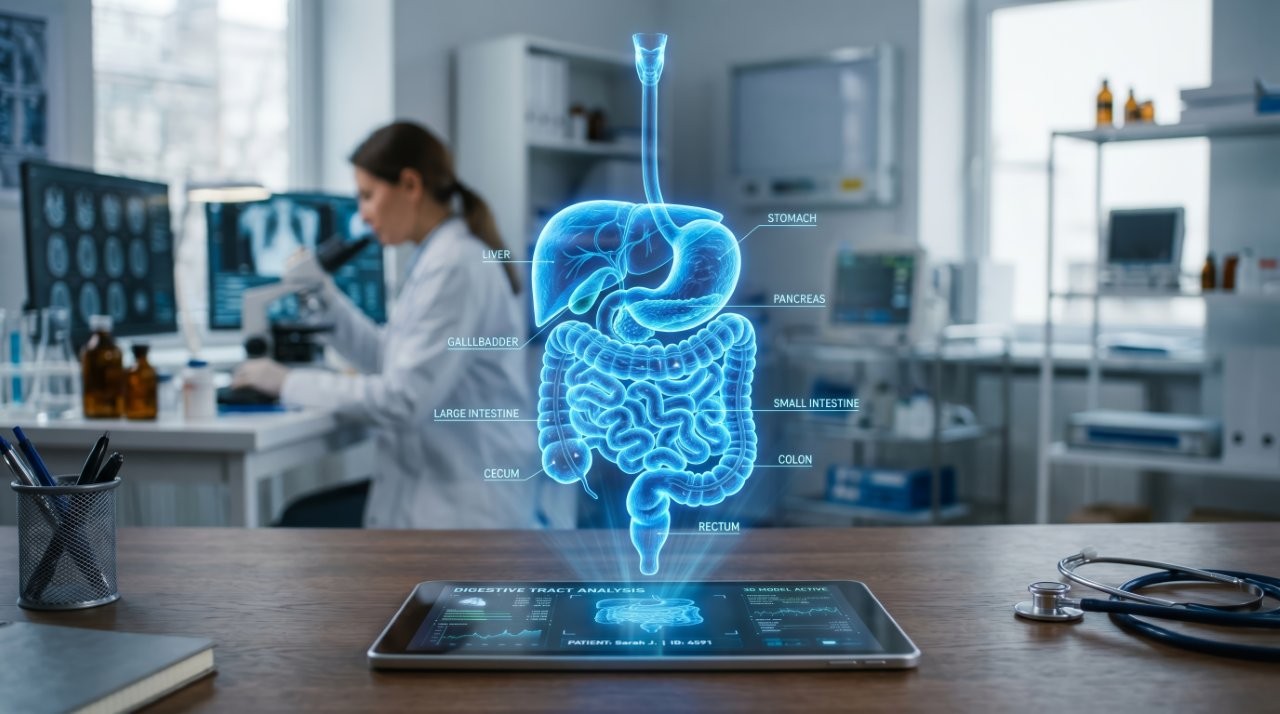
To understand the significance of this technological advancement, it helps to understand the gut microbiome. The microbiome refers to the trillions of bacteria, fungi and other microorganisms living in the digestive tract. Far from passive, this biological community actively influences immune function, metabolism, hormone balance and mood. Research has established a documented link between the microbiome and over 100 health conditions, from irritable bowel syndrome and type 2 diabetes to Alzheimer’s disease and autoimmune disorders. Unlike genetics, it can potentially be modified through targeted nutritional intervention. This is the territory ENBIOSIS Biotechnology has spent years mapping.
“South Africa is not a late adopter in this story. It is one of the first movers,” said Ömer Özkan, CEO and Founder of ENBIOSIS Biotechnology. “The conversations we are having with academic and clinical institutions here reflect a genuine appetite to understand where the science is heading and how it can make a real difference to patients.”
“South Africa carries a heavy burden of chronic disease, and we cannot address that through pharmaceuticals alone. What this technology offers is a science-backed approach that uses food-grade formulations to target the underlying causes of these conditions through the gut microbiome. The work we are doing with medical students and clinical institutions is about giving the next generation of practitioners a different set of tools and a deeper understanding of where disease actually begins,” said Dr Khumalo, ENBIOSIS South Africa.
ENBIOSIS 2.0 builds directly on the original ENBIOSIS Biotechnology platform, peer-reviewed in leading scientific journals and adopted by partners across 16 countries. The technology was recognised as the Gold Medallist among 256 high-potential technology scale-ups from Europe, Turkey and Israel at the UK Tech Rocketship Awards. Clinical results from the first formulation validated on the ENBIOSIS 2.0 platform, developed for dry eye disease, showed a 60.7% improvement in tear production among dry eye disease trial participants, compared with approximately 40% for the most widely prescribed regulatory-approved treatment over the same period.
“The science that behind this platform has been two decades in the making,” said Prof. Dr. Özkan Ufuk Nalbantoglu, CTO of ENBIOSIS Biotechnology. “We are now at the point where we can bring it into clinical education and apply it to conditions that affect millions of people. That is what makes this engagement with South African institutions so meaningful.”
The company’s 2026 clinical pipeline spans gastrointestinal conditions including inflammatory bowel disease, as well as type 2 diabetes, dermatological conditions and neurological diseases, reflecting a platform designed for application across the full range of microbiome-linked health.
With clinical trials underway across six disease areas and a growing footprint in South Africa, the science ENBIOSIS Biotechnology has spent two decades building is now being put to the test at scale.
For more articles like this click here.
If you enjoyed this website then check out our other sites: Wedding and Function, Home Food and Travel, Kids Connection, Thirsty Traveler, Bargain Buys, Boat Trips for Africa.
Need help with your online marketing then visit Agency One