
Resilience can be defined as a choice to recalibrate and take positive action when things aren’t going well. And things are certainly not going well in the Middle East which means that the rest of the world faces a surge in inflation, economic uncertainty and even social instability.
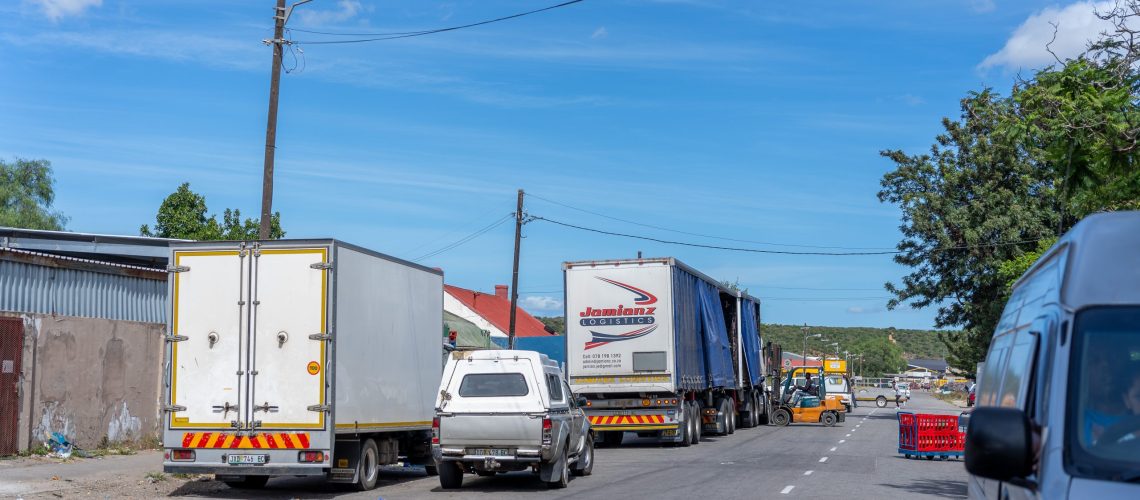
Governments, business and households around the world are making plans to deal with rising transport costs and food prices. First to be affected are companies that move goods across oceans, through the air and on roads. How they build resilience to a surge in fuel costs will help everybody down the supply chain.
Technology and good data are here to help build that essential resilience. Companies that have adopted cutting edge route-to-market tools and strategies can testify how they have significantly reduced transport costs in the past.
With petrol and diesel prices likely to increase significantly, a Route-To-Market Solution is no longer a nice-to-have but essential.
At this stage in the war it is hard to predict when it will end and whether the cessation of hostilities will allow oil prices to decline.
Why oil prices are high and fluctuating
The war between Israel and the US against Iran has resulted in the Strait of Hormuz being closed to marine traffic. These straights are widely considered the most critical energy chokepoint in the world.
About 20 million barrels of oil per day normally pass through the strait and this represents around 20% of global petroleum consumption. Because the oil cannot be exported, the oil producers have cut production to the tune of at least 10 million barrels per day. This has resulted in a sharp increase in oil prices and the knock-on effect on transportation cost has been felt immediately around the world. Much of this oil is destined for Asian markets, particularly China, India, Japan, and South Korea.
Mitigating the drop in exports and production
The oil exporters and their partners and customers are seeking ways to increase oil production elsewhere, find alternative routes to export oil from the Middle East and release reserves. These are some of the actions and events that may reduce and stabilise the price of oil.
Saudi Arabia and UAE have pipelines that bypass the Straights. By increasing their use above their average, they can compensate for one-fifth of normal oil flows that have been lost.
Countries such as the United States and members of the International Energy Agency are releasing crude oil from strategic petroleum reserves to stabilise markets. At this stage it is uncertain how much of the lost production and exports will be compensated by this action.
Sanctions relief and investment have allowed Venezuela to gradually increase production. Venezuelan crude is particularly important for refiners that previously relied on heavy Middle Eastern crude. This will take time to help with closing the gap.
The US has lifted some sanctions on Russian oil exports but this to will take time to come into effect.
What the future holds
The future direction of oil prices will largely depend on the duration of the conflict and the level of disruption in the Strait of Hormuz. Possible scenarios include:
Short-term disruption – Oil prices remain volatile but gradually decline as alternative supply increases.
Prolonged closure – Prices could remain above $100 per barrel and potentially spike much higher if the strait remains blocked for months.
How can a Route-to-Market Strategy help your business?
Maybe the war ends soon, maybe is doesn’t, maybe the war expands and Russia gets involved and oil prices rise even more. Uncertainty abounds and now is that moment when your company needs to build resilience.
Frontline Research Group is here to help. Our Route-To-Market Solutions are tried and tested and have improved not just the cost of transporting goods but the efficiency of distribution too. Your clients benefit as do the consumers at the end of the chain.
Even in a worst-case scenario where social unrest increases and normal distribution routes are blocked, a RTM tool can reroute your vehicles to insure unhindered deliveries.
For more information contact: Steve Johnson, Managing Director at Frontline Research Group on Tel: +230 5493 6376 and email: steve@frontlineresearchgroup.com or Art Janse van Rensburg, Executive: New Business Sales, on Tel: +27 (0)71 889 9080 and email art@frontlineresearchgroup.com
For more articles like this click here.
If you enjoyed this website then check out our other sites: Wedding and Function, Home Food and Travel, Kids Connection, Thirsty Traveler, Bargain Buys, Boat Trips for Africa.
Need help with your online marketing then visit Agency One.