

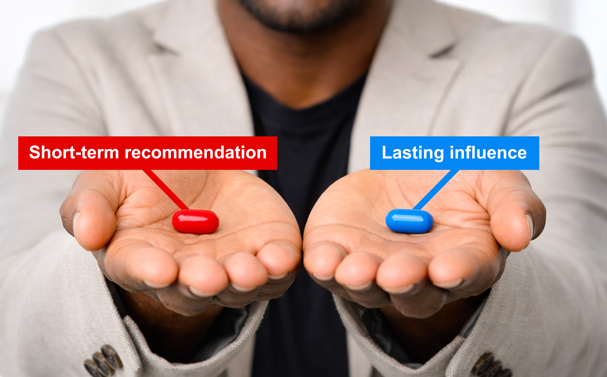
In today’s competitive marketplace, brands are increasingly judged not by their advertising, but by a critical, often overlooked interaction: the moment a customer asks, “What do you recommend?” This split-second exchange—known as the Recommendation Moment—is emerging as one of the most powerful drivers of customer trust, loyalty, and revenue.
Across industries including retail, hospitality, banking, and healthcare, frontline employees are required to make real-time recommendations that carry both immediate and long-term consequences for the brand. These interactions are unscripted, human, and decisive. Research shows that 92% of consumers trust recommendations from individuals over traditional advertising, reinforcing the importance of empowering frontline teams with the confidence and knowledge to guide customer decisions effectively.
“Educational marketing is one of the most effective ways to build lasting confidence among frontline teams,” says Michael Gullan, CEO of G&G Advocacy. “When employees truly understand what they’re recommending—and why—they communicate with credibility. That credibility is what earns customer trust.”
Unlike traditional training, which can quickly become outdated, leading organisations are adopting continuous learning models that embed education into the daily flow of work. Educational marketing equips employees with a deeper understanding of products, services, alternatives, and real-world applications, enabling them to respond intuitively to customer needs.
Over time, this ongoing exposure transforms knowledge into instinct. Rather than relying on memorised scripts, frontline employees draw from a mental library of experience, enabling them to make confident, relevant recommendations in the moment. According to research from McKinsey, organisations that invest in continuous capability building can improve employee performance by 20 to 30 percent.
In high-trust environments such as pharmacies, the impact is particularly evident. Continuous education through interactive courses, practical resources, and case studies allows pharmacists to better understand symptoms, conditions, and treatment options. When a customer seeks advice, they are able to assess the situation quickly, recommend appropriate solutions, and guide safe usage with confidence. These interactions not only influence immediate purchasing decisions but also foster long-term customer loyalty.
Confidence plays a central role in this dynamic. Customers are highly attuned to the certainty and clarity of the person assisting them. Well-informed employees engage more effectively, explain options more clearly, and provide recommendations with authority. This confidence is built through repetition, reinforcement, and real-world application, reducing hesitation and improving the overall customer experience.
At the same time, continuous education ensures alignment across the organisation. When frontline teams are consistently exposed to the same messaging, value propositions, and use-cases as marketing campaigns, the result is a more cohesive and credible brand experience. Customers encounter a consistent narrative, whether online or in person, strengthening trust at every touchpoint.
Organisations that prioritise frontline education are seeing measurable results. According to Deloitte, companies with strong learning cultures are 52 percent more productive. More importantly, they are transforming frontline employees into trusted advisors—individuals capable of understanding customer needs, navigating complex choices, and guiding decisions with confidence and clarity.
As businesses look for new ways to differentiate in an increasingly crowded market, the Recommendation Moment offers a powerful, human-centered advantage. In the moments that matter most, it is not advertising or promotion that shapes decisions, but the confidence and credibility of the person delivering the recommendation.
For more articles like this click here.
If you enjoyed this website then check out our other sites: Wedding and Function, Home Food and Travel, Kids Connection, Thirsty Traveler, Bargain Buys, Boat Trips for Africa.
Need help with your online marketing then visit Agency One