

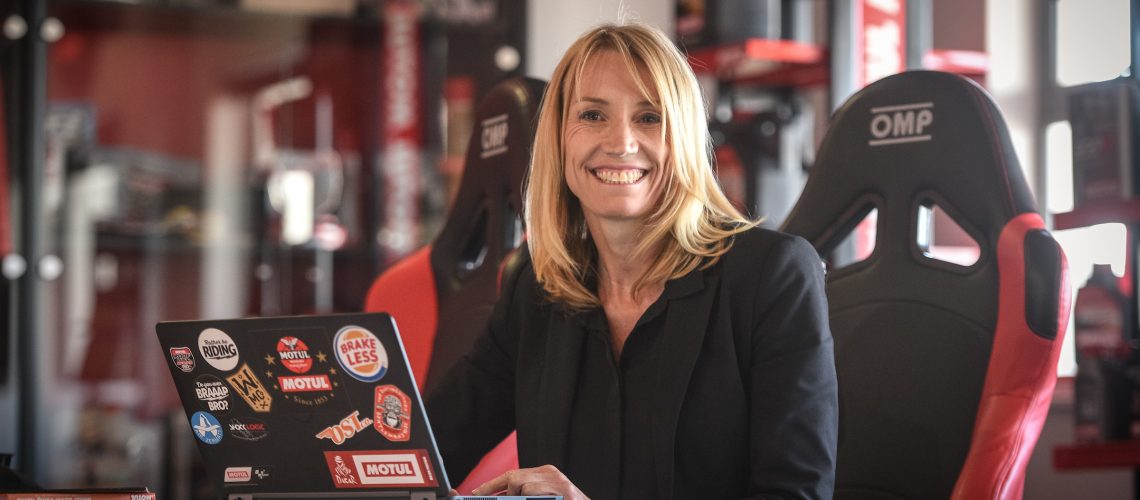
By Mercia Jansen, Managing Director of Motul South Africa
In the world of high-performance lubricants, we often talk about friction—how to minimise it, manage it, and ensure systems run smoothly under pressure. Today, however, the friction we are watching isn’t inside an engine. It is geopolitical, and it is already flowing through the arteries of the South African economy.
As we move into April 2026, the effective blockade of the Strait of Hormuz following recent military escalations has shifted from distant headlines to a direct and immediate business reality for South Africa. This is not simply a fuel price issue—it is a structural shift in the cost and complexity of doing business.
The Strait Reality: Why It Matters to South Africa
The Strait of Hormuz remains the world’s most critical energy chokepoint, with roughly 20 million barrels of crude and refined products moving through it daily – representing about 20% of global consumption. For South Africa, the exposure is significant. As a net importer of petroleum, we rely heavily on supply from Gulf nations. When this corridor is constrained, the impact is felt almost immediately across our economy. What we are experiencing now is a “perfect storm” – where global oil prices and currency pressure are moving against us at the same time.
The Arithmetic of Instability
The current data tells a clear story:
Brent Crude Volatility: From early 2026 expectations of ~$60 per barrel, prices have surged to a peak of $119.50 in March. While we are seeing a slight softening toward $100 this week on hopes of a diplomatic resolution, the market remains in a state of “supply shock.”
Rand Depreciation: Heightened global uncertainty has weakened emerging market currencies. The Rand has faced extreme pressure, averaging R16.64 against the US Dollar during the latest review period, a sharp decline from the R15.00 levels seen at the start of the year.
Fuel Price Shock: Effective 1 April 2026, South Africa implemented massive price hikes. Petrol increased by R3.06 per litre, while diesel saw a massive R7.51 per litre increase. It is important to note that these hikes would have been R3.00 higher had the National Treasury not implemented an emergency temporary reduction in the general fuel levy to cushion the blow.
For logistics, agriculture, mining, and mobility-driven industries, this is not marginal—it is material. With the inland 50ppm diesel wholesale price now at a record R26.11 per litre, margins are tightening and the room for error is shrinking.
Beyond the Fuel Tank: The Lubricant Effect
While fuel is the most visible impact, it is not the only one. Lubricants are complex formulations derived from base oils and advanced additives—both of which are linked to global petrochemical supply chains now under pressure.
Supply Chain Disruption: The rerouting of vessels around the Cape of Good Hope to avoid the Strait and Red Sea is pushing up freight costs and extending lead times.
Rising Input Costs: Higher global energy costs and “war-risk” insurance premiums are significantly increasing the cost of refining and production of key lubricant components.
It is in these volatile moments that heritage matters. At Motul, our perspective is informed by 173 years of industrial history. Since our founding in 1853, we have navigated every major global shift—from the 1970s oil shocks to multiple global conflicts. This longevity provides a unique vantage point: we have seen that in times of crisis, “performance” isn’t just a technical specification; it is a measure of operational endurance.
A Shift in Decision-Making
What this moment demands from businesses is not just reaction—but smarter decision-making. In stable environments, short-term cost-saving decisions may seem acceptable. In volatile environments like the one we are entering, they become significantly riskier.
Choosing lower-cost inputs, particularly in critical areas like lubrication, can result in increased wear, reduced efficiency, and unplanned downtime—costs that quickly outweigh the initial saving. In 2026, quality is no longer a preference; it is a risk management strategy. The right lubrication minimises operational downtime and maximises equipment life—critical when capital for new machinery is under pressure.
The Importance of Trusted Partners
Equally important is the choice of supplier. In uncertain environments, businesses should be asking: Who has the experience to navigate disruption? Who has resilient, global supply networks?
Suppliers that have been in the market for decades—and have weathered multiple global cycles—are better equipped to absorb shocks, maintain continuity, and support their customers through uncertainty. With our global expertise, Motul operates across diverse supply chains, allowing us to adapt quickly to changing conditions. Our focus extends beyond delivering high-performance products; it is about providing reliability when the environment becomes unpredictable.
Looking Ahead
South Africa has always shown resilience in the face of external pressures. This moment will be no different—but it will require sharper decision-making, stronger partnerships, and a focus on long-term value over short-term cost. While global instability may be beyond our control, how we respond to it is not.
At Motul, we remain committed to standing alongside our customers—helping them navigate rising costs, protect their operations, and continue moving forward with confidence. Because in challenging times, performance is not just about engines—it’s about endurance.
For more articles like this click here.
If you enjoyed this website then check out our other sites: Wedding and Function, Home Food and Travel, Kids Connection, Thirsty Traveler, Bargain Buys, Boat Trips for Africa.
Need help with your online marketing then visit Agency One